From pasture to pack
Experience and knowledge, science and art, technology and tradition all come together to make our cheese. It’s this combination of expertise that means our cheddar always leaves the farm in peak condition.
01


All about cheesemaking
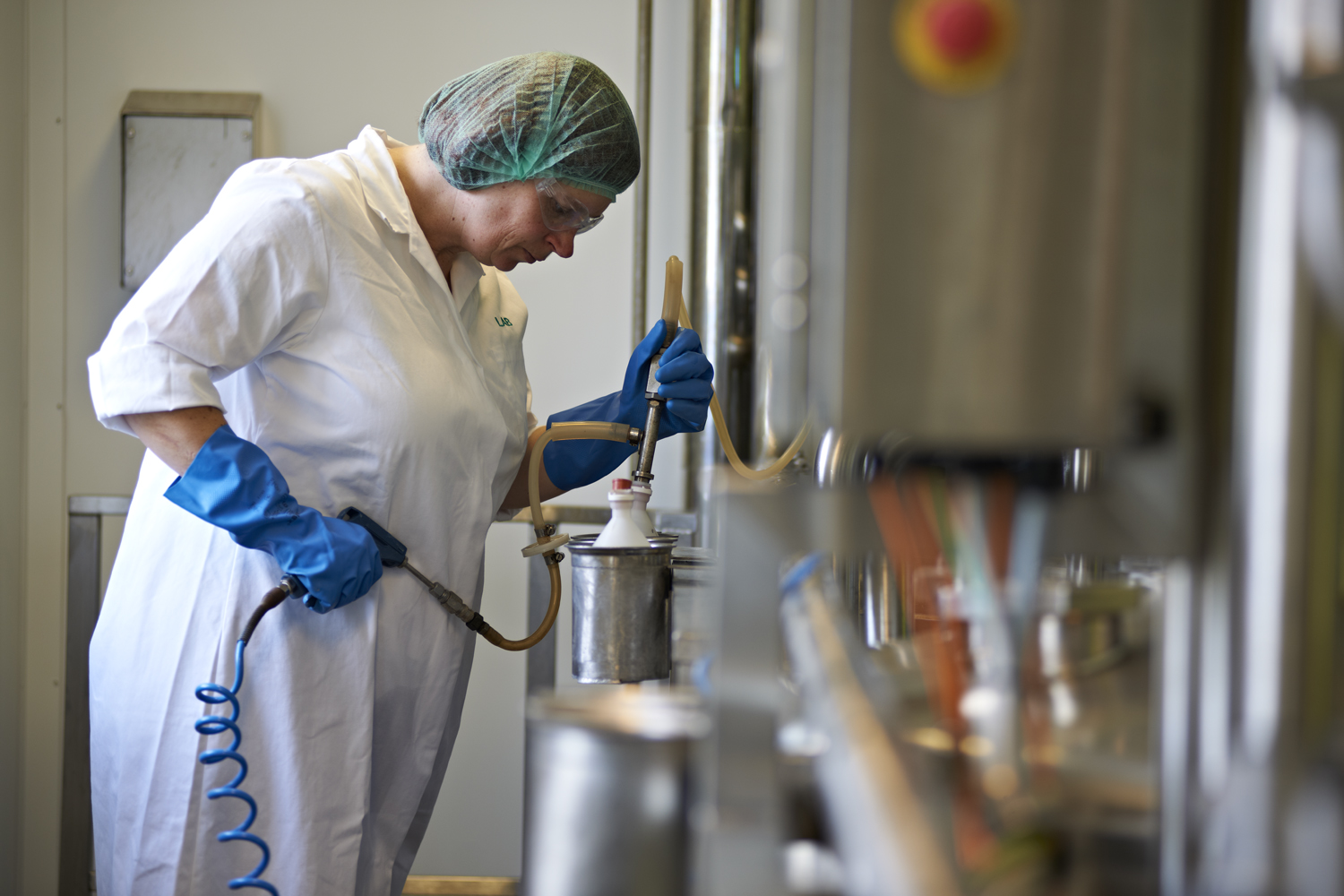
Cheesemaking is both a science and an art. Milk changes from season to season, depending on what the cows eat or even the weather. As well as scientific gadgets, our cheesemakers use their experience and instincts throughout the cheesemaking process to ensure our cheddar is the best it can be.
02
Step 1
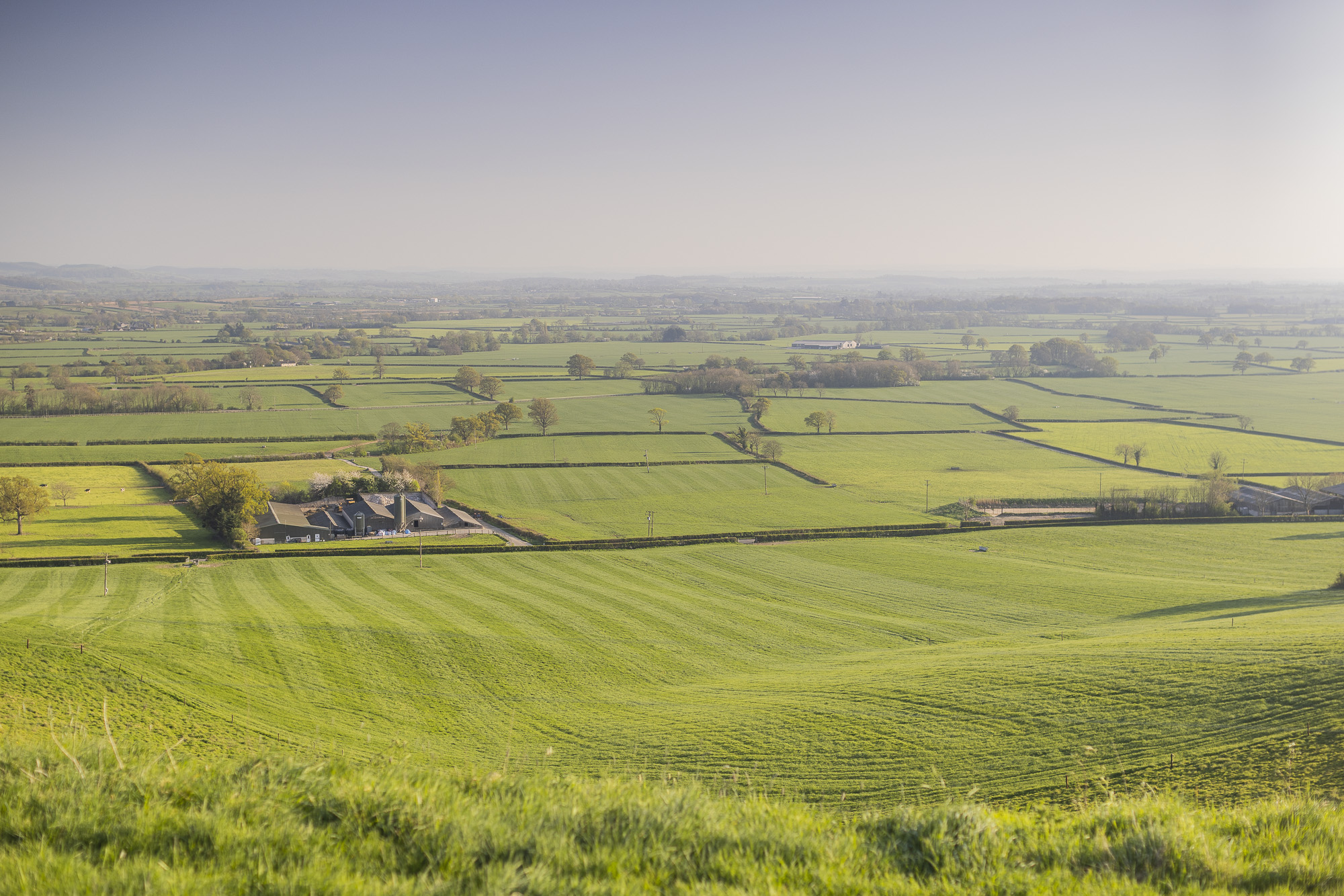
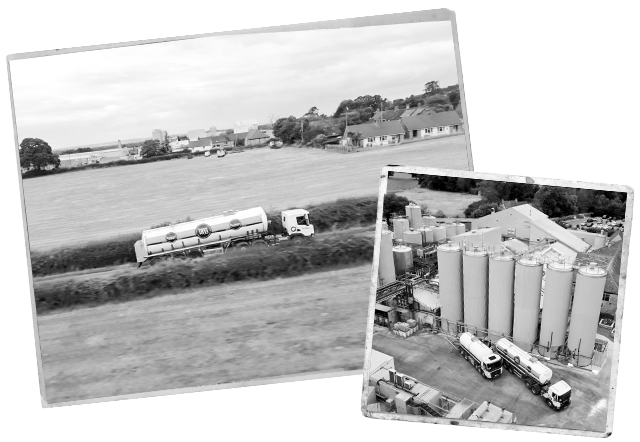
From farm to dairy, quality is our promise. Every day 27 milk tankers deliver fresh milk from our trusted farms. Each batch is carefully tested both at the farm and again upon arrival at our dairy to ensure it meets our high standards.
Step 2
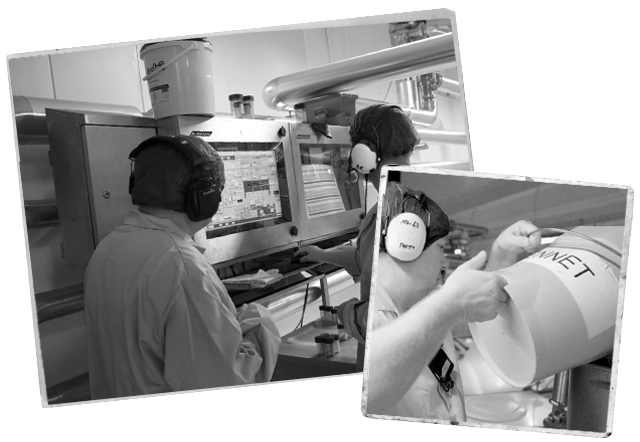
The milk is pasteurised before we add the starter culture and our mushroom-based vegetarian rennet to the vat. After 27 minutes, the mixture sets into a mousse-like texture and is gently cut. As the vats are slowly heated, the curds and whey begin to form. Over the next few hours, the whey is gradually drained away, leaving behind the curds.
Step 3
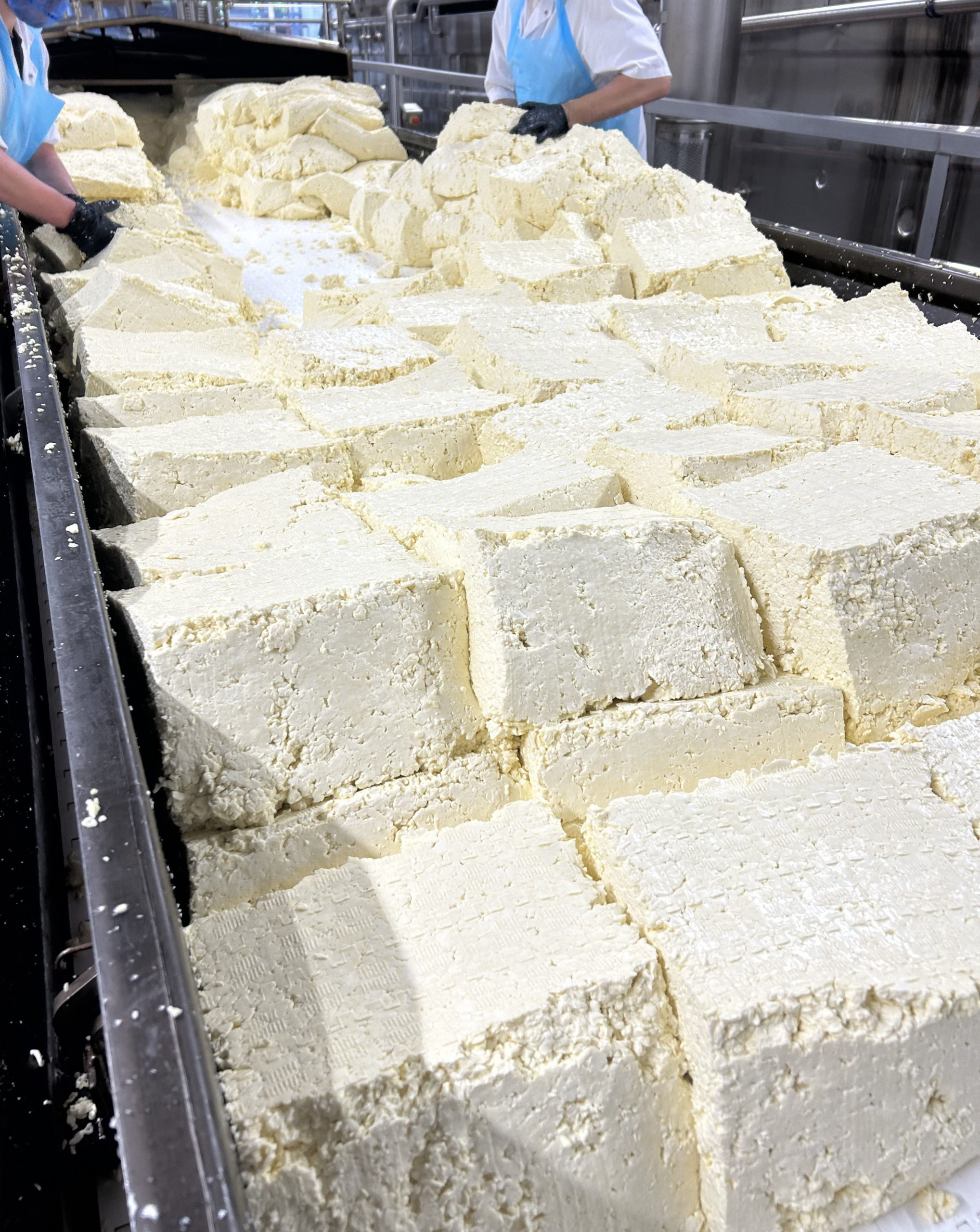
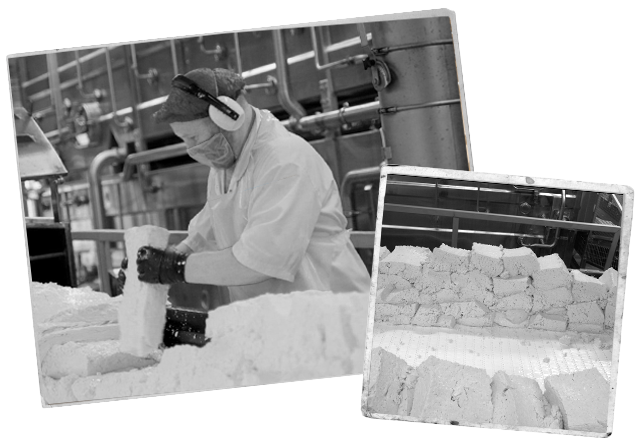
The curds are hand-turned in a traditional cheddaring process before being transferred to the salter. Once salted, they’re gently compressed in towers, allowing any remaining whey to drain away. The towers form the curds into 20kg blocks, which are then vacuum-sealed and passed through a metal detector for added quality assurance.
Step 4
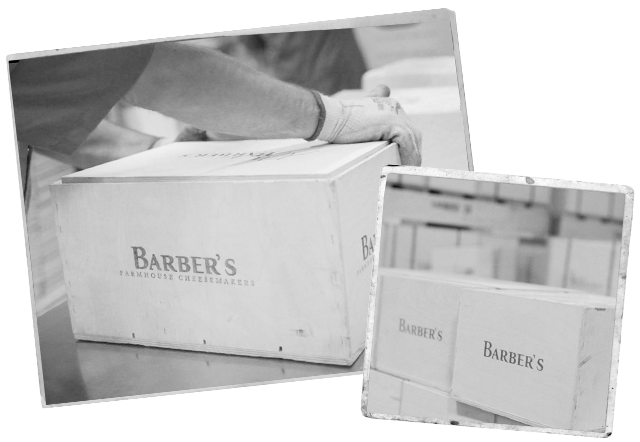
Finally, the cheese blocks are sealed, labelled, and placed into our specially crafted wooden boxes. The wood acts as a natural insulator — when packed, the cheese is around 32°C, and over six weeks it slowly cools to 11°C. This gradual cooling allows the starter culture to continue developing the cheese’s complex flavour and smooth texture.
Step 5
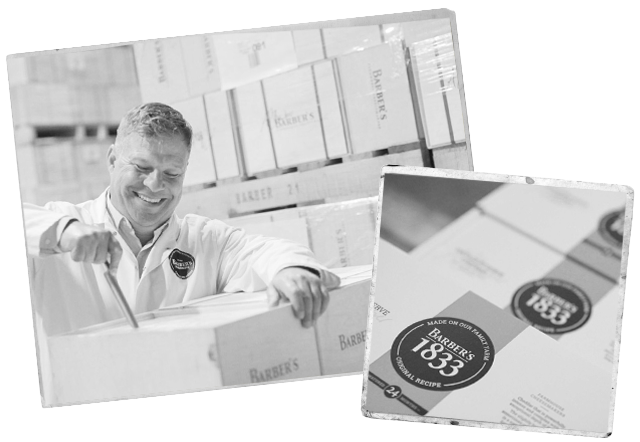
Each batch of cheese then matures for a minimum of three months before our expert cheese grader samples it. With cheeses maturing for up to two years, he tastes around 100 cheeses a week, carefully monitoring how each one develops. Only when our cheese reaches its peak of flavour and texture does it leave our site. Ready to be enjoyed at its very best.
03
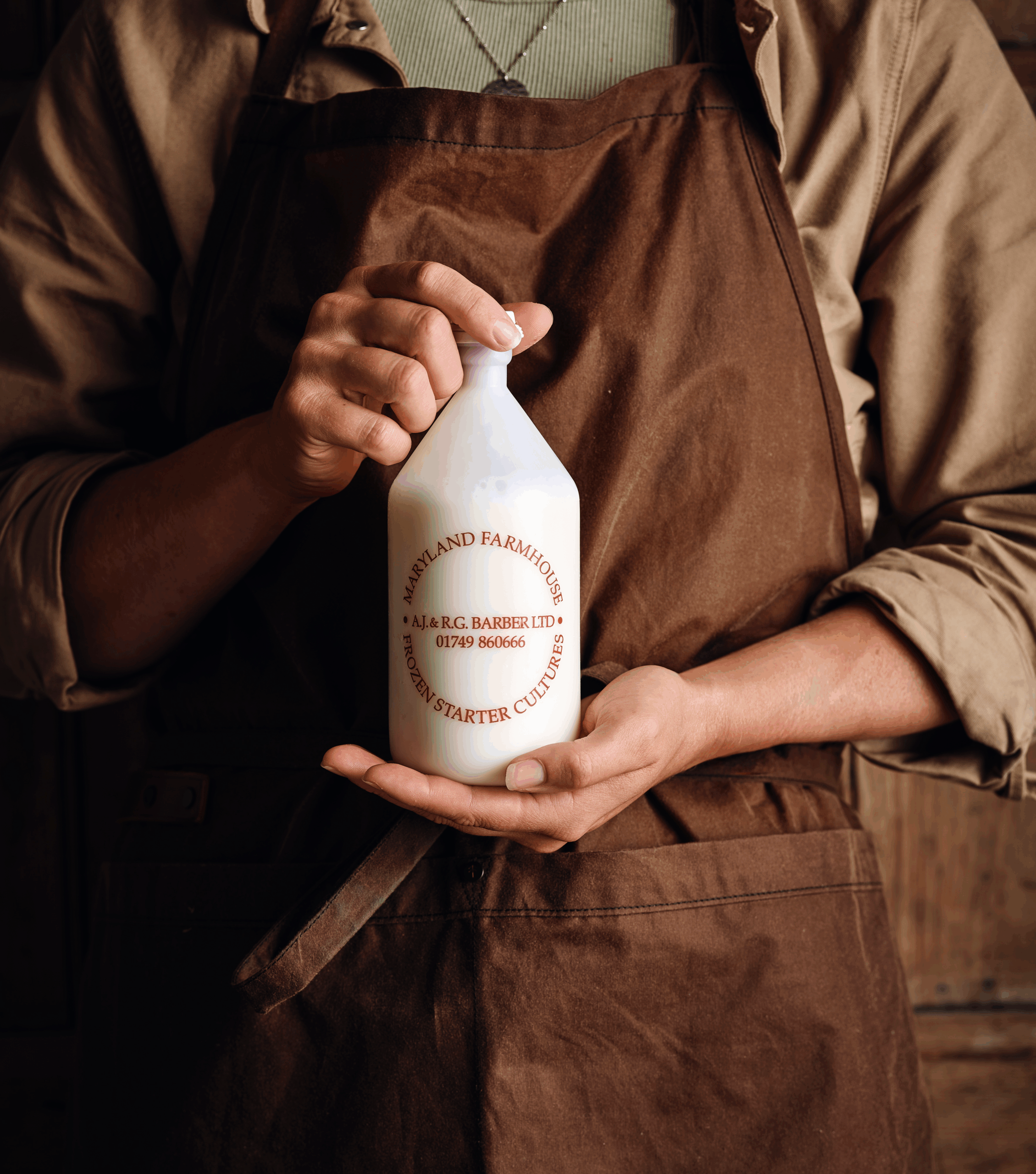
The Guardians of the original starter culture
When it comes to making great cheese, we have a secret weapon. By using the traditional pint starter cultures — once used in all farmhouse cheesemaking — we can ensure that our cheddar has the complexity of flavour that has defined the famous cheese for centuries.